ScreenJSON.com Relaunched With Full Toolchain

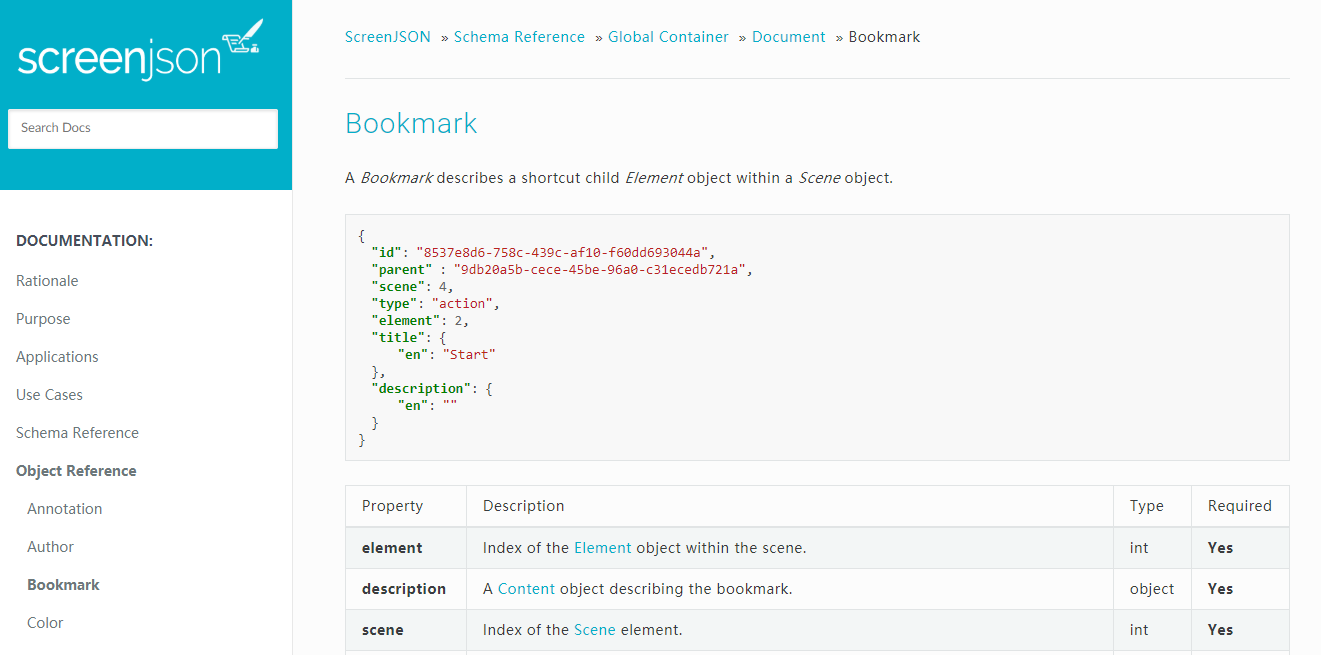
Around 8 years ago, it was a simple idea on a Montreal desk: how to encrypt and store a screenplay in a NoSQL database. A basic JSON schema, and an auto-generated Rust help documentation explaining it. Some simple tools on top to test the concept. There were plenty of interested emails, but mostly from engineers working in film who wanted to know how to use it.
But time and making a living gets in the way, along with plenty of other projects fighting for space. Then came AI, LLMs, and a whole new way of working. The need to store data against vector embeddings for RAG and other new methodologies changed everything.
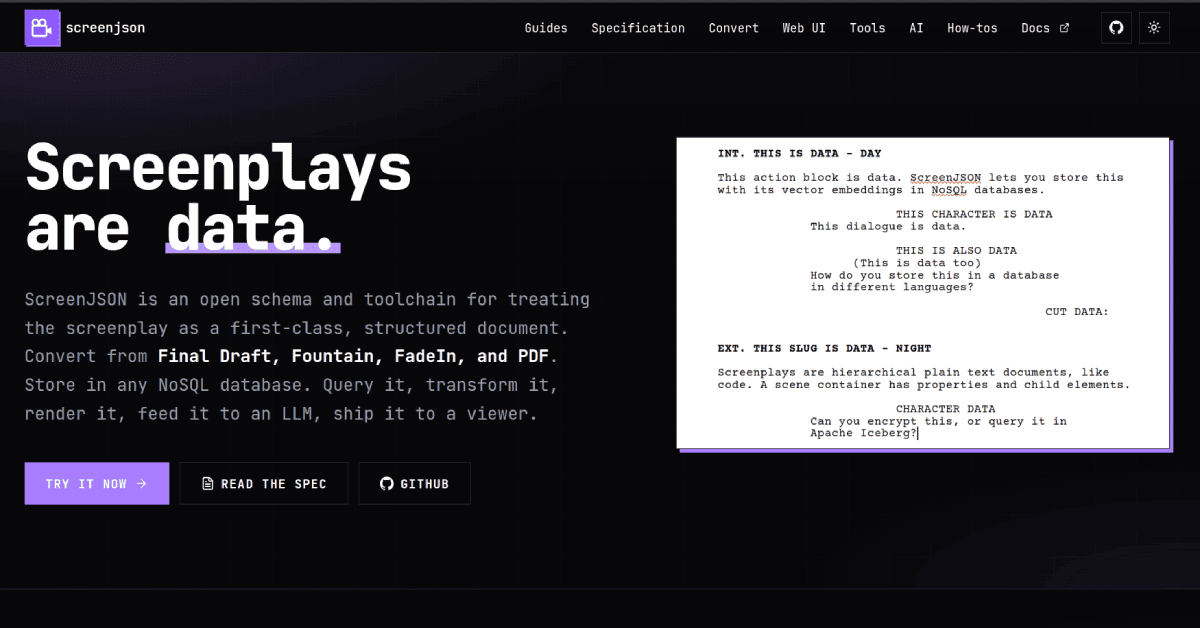
Having a schema isn't enough when you need tools to illustrate what it can do, and guides to lay out how it can be used. So began a new GitHub account under @screenjson with a clearly defined set of new open source tools and a year's work to bring them alive.
- The schema itself: https://github.com/screenjson/screenjson-schema
- A simple exporter: https://github.com/screenjson/screenjson-export
- A web JS viewer: https://github.com/screenjson/screenjson-ui
- A desktop/iOS/Android viewer: https://github.com/screenjson/screenjson-viewer
But also two tools held back for commercialisation: screenjson-cli and Greenlight, an industrial grade batch processor.
The original article from 2017 probably needs a printout in PDF now.
 Alex Coppen